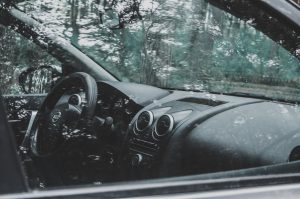

It is 5 PM, and the workday is finally over. The walk across the parking lot is its own small ordeal, asphalt radiating heat through every step. The car sits exactly where it was left eight hours ago, windows up, roof baking under a cloudless sky.
The door handle is uncomfortably warm, almost too hot to hold. Pulling the door open releases a wall of stagnant, superheated air, thick with the smell of hot plastic and vinyl. Getting in right away is not an option. Standing there a moment lets some of that trapped air escape first.
Ninety seconds pass before the cabin feels survivable enough to enter. The seat burns through work clothes on contact. The steering wheel is too hot to grip without a cloth or a blast from the vents first. The drive home starts with AC on full blast and windows cracked, fighting a losing battle for the first several minutes. Eventually the cabin cools enough to breathe normally again. This scene repeats itself, in some form, for millions of commuters every August.
Why Cars Turn Into Ovens
Unprotected automotive glass transmits roughly 85 percent of the solar energy that hits it. That energy pours in for hours, and every surface inside the car absorbs it. By late afternoon, dashboard surfaces commonly reach 180 to 200°F in direct sun. Seats climb to 140 to 160°F. A steering wheel in full sun can exceed 160°F. Cabin air itself can reach 150 to 172°F in extreme cases: closed car, full sun, high ambient heat.
None of these surfaces cool the moment the sun moves or a cloud passes. They keep radiating stored heat back into the cabin, which is why the air feels like an oven and not just a hot room. AC does not fight outdoor air when a car first starts. It fights a car-shaped heat radiator working from every direction at once. Sunshades help a little, but only when someone remembers to use one every single day. Parking in shade is not always possible, and a cracked window barely makes a dent.
How Ceramic Film Changes the Equation
Ceramic Film addresses the problem differently. Installed once, it works every day after that, with no extra steps required. Ceramic nanoparticles embedded in the film block 70 to 80 percent of infrared radiation, the part of sunlight responsible for most heat buildup. Less heat enters, so less heat gets stored in the first place.
The difference shows up clearly in side-by-side testing. Two identical vehicles parked in matching conditions, one with Ceramic Film and one without, can show a 15 to 30°F gap in interior temperature after a full day in direct sun. The untinted car reaches peak heat within two to three hours and stays there. The tinted car never gets close to the same ceiling.
Why August Makes It Worse
Ground and pavement temperatures build all summer, so August starts hotter than June or July before the sun even comes up. UV index stays high, afternoons stay hot longer, and back-to-school schedules put more cars sitting in lots during peak heat hours. Record-breaking grid demand this year, over 166,000 megawatts during a July heat wave, is a preview of what August tends to inherit and intensify.
There is also a real cost to this on the commute home. A car starting its drive at 110°F needs far less AC effort than one starting at 160°F. Running AC on medium instead of maximum can improve fuel economy by 5 to 15 percent, depending on the vehicle. For a 25-mile commute each way, five days a week, that adds up across an entire August.
What to Look for Before Booking
Ceramic content matters more than how dark the film looks. A lighter ceramic film at 50 percent VLT will often outperform a dark 15 percent dyed film for heat rejection, because ceramic nanoparticles target infrared specifically, not visible light. August is when this upgrade earns its keep the most, and for anyone whose afternoons already look like the scene above, same-week installation is available now. Book same-week installation today.